

Industrial environments have their own rules. What represents a minor impurity in an office can become a serious problem in a production facility. Dust, oils, metal particles, and material residues are not just an aesthetic challenge. They directly affect the production process, machine operation, and employee safety. As stated in our Complete guide to maintaining hygiene in commercial spaces, industrial facilities require the highest level of discipline when it comes to production facility cleaning and maintaining hygiene. The reason is simple. In production, cleanliness is not a matter of appearance, but of process stability.
In production facilities, we do not clean just to make the space look tidy. We clean to ensure that production runs without interruptions, that equipment operates precisely, and that employees work in a safe environment.
Specifics of the industrial environment
Production facilities are among the most demanding workspaces when it comes to maintaining hygiene. Unlike offices, surfaces here are exposed to constant strain.
Industrial dust accumulates on equipment and sensors. Floors are exposed to oils, chemicals, and intensive forklift movement. Production lines must remain functional throughout the entire working day.
Each of these factors requires a specific approach.
We must plan professional hygiene maintenance in production facilities to support the production process, not disrupt it. This means that cleaning activities must be aligned with the factory’s operating schedule and industry-specific requirements.
Industrial dust and microparticles
One of the biggest challenges in production facilities is industrial dust. It is generated during material processing, goods transport, and machine operation.
At first glance, dust may seem like a harmless issue. However, in an industrial environment, it can have serious consequences.
Microparticles can affect the operation of sensitive sensors and electronics. In modern production lines, a large part of the process depends on automation and digital systems. When dust accumulates on these components, the risk of malfunctions increases.
Regular removal of industrial dust is therefore not just a matter of hygiene. It is part of preventive equipment maintenance.
Professional industrial vacuum cleaners with HEPA filters enable the removal of microparticles that standard equipment cannot capture. This significantly reduces the load on machines and extends their service life.
Maintenance of floors in production halls
Floors in production facilities endure the greatest load. They are exposed daily to the movement of forklifts, pallet trucks, and transport equipment.
In addition, floors often contain:
- oils and lubricants
- chemicals
- production material residues
If these layers are not properly removed, surfaces become slippery and dangerous for workers.
Professional floor maintenance in industrial facilities includes the use of specialized floor cleaning machines that remove even the most persistent dirt. This equipment enables deep cleaning of large areas without interrupting production.
The result is a safer working environment and a longer lifespan of floor surfaces.
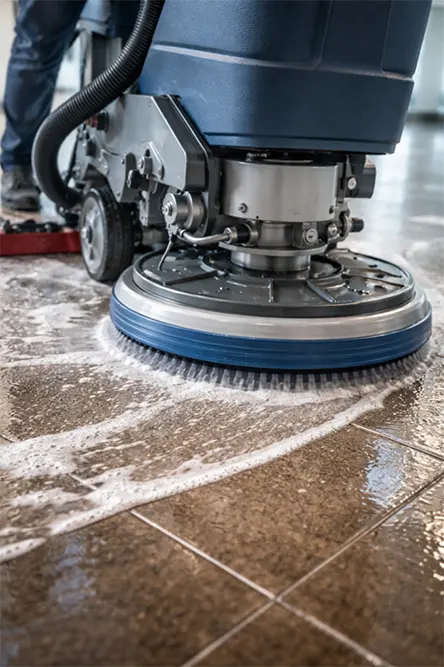
Photo: Invekta Group d.o.o.
Production facility cleaning – Contamination control
In certain industries, contamination control plays a key role. This is especially important in the food and pharmaceutical industries where strict hygiene standards apply.
Inadequate hygiene can directly affect the quality of the final product. In these sectors, even a small amount of contamination can compromise the product.
Maintaining hygiene in these facilities must comply with HACCP standards and other industry protocols. This includes controlled cleaning procedures, proper equipment handling, and clearly defined work zones.
A professional approach ensures that the production environment remains compliant with all sanitary and inspection requirements. You can find more about sanitary and inspection requirements here.
Professional maintenance regime
Maintaining hygiene in production facilities cannot be organized in the same way as in offices. The industrial environment requires precise planning and adapted working methods.
One of the key steps is zoning.
Warehouses, production halls, and administrative zones have different hygiene requirements. Each zone requires a specific cleaning regime and different equipment.
Zoning enables cleaning activities to be organized efficiently and without disrupting production.
Production facility cleaning – Specialized equipment
Industrial cleaning requires equipment capable of meeting demanding working conditions.
Professional floor cleaning machines enable fast and thorough cleaning of large areas. Industrial vacuum cleaners with HEPA filters remove fine particles that can affect equipment performance.
Using appropriate equipment significantly increases the efficiency of hygiene maintenance and ensures a consistent standard of cleanliness in production facilities.
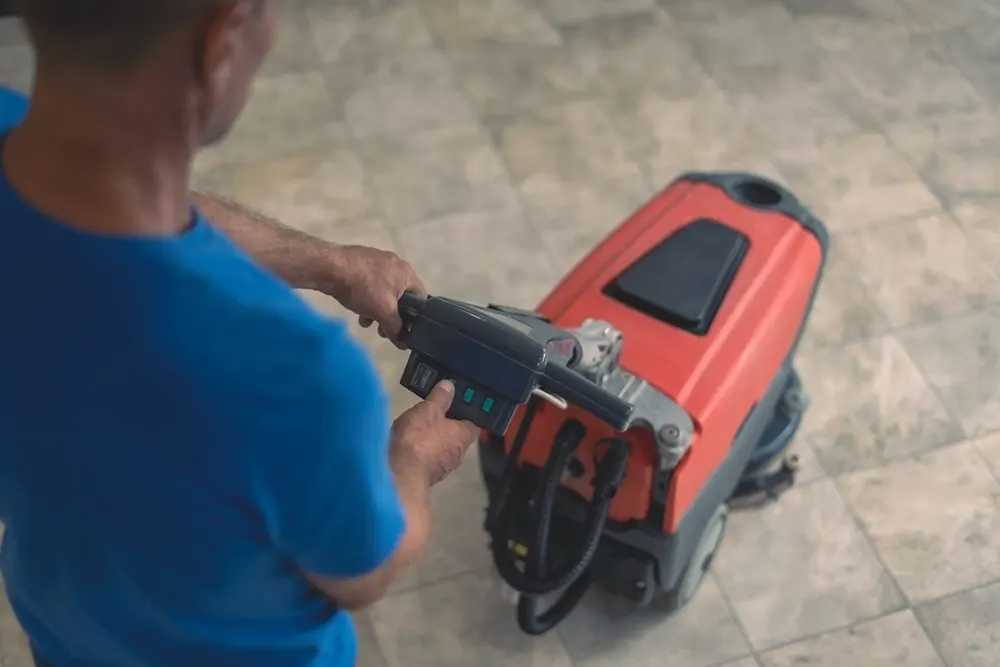
Photo: Invekta Group d.o.o. production facility cleaning
How to organize production facility cleaning without interrupting operations?
In an industrial environment, we organize cleaning so that it does not interfere with the production process. Therefore, we schedule activities during shifts, production breaks, or at times when facility load is lowest.
This is another important element, the timing of activities.
This approach allows production to function without disruption while maintaining a high level of hygiene.
Here is an example of how we have helped various companies we work with better align the organization of production facility cleaning with their operational structure:
Shift work was organized in three shifts as needed, from 06h – 14h, from 14h – 22h, and from 22h – 06h.
Additionally, our employees work from 17h for four or five hours after company staff finish their shifts, performing activities in company headquarters connected to production facilities, thereby supporting the overall organization of production facility cleaning for employees moving between the production facility and administrative building.
We carried out special general cleaning of production lines during annual leave periods, planned machine shutdowns, and the commissioning of new production lines.
In this way, we helped companies keep their equipment in good condition and ensure its long-term use.
Return on investment for the factory
Professional maintenance of hygiene in production facilities also brings tangible business benefits.
When an industrial space is properly maintained, the risk of breakdowns in expensive machinery is reduced. Equipment operates more reliably because there is no accumulation of dust and impurities.
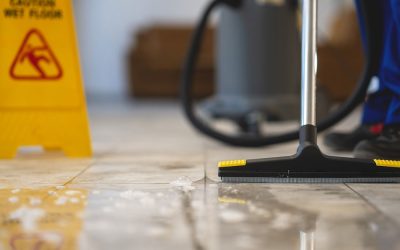
Employee safety is also improved. Clean and dry floors reduce the risk of slips and workplace injuries.
In other words, maintaining hygiene becomes part of production quality control.
In an industrial environment, hygiene has a much broader role than it may initially seem. It affects machine operation, employee safety, and product quality.
Professional maintenance of hygiene in production facilities ensures a stable workflow, reduces operational risks, and helps companies meet all industry standards.
In production, cleanliness is not just a matter of appearance.
It is a quality standard.
Production facility cleaning – Frequently asked questions (FAQ)
- Does production facility cleaning require stopping the production line?
Not necessarily. Professional maintenance is planned to follow your operational cycle. Our teams can work during shifts, breaks, or in the third shift (night work). We usually schedule general machine cleaning during planned downtimes or collective holidays to avoid any loss in productivity.
- What equipment do you use to remove industrial dust?
We exclusively use professional industrial vacuum cleaners with high-efficiency HEPA filters. These devices not only remove visible dirt but also prevent microparticles from returning to the air, which is crucial for protecting sensitive electronics and sensors on your machines. We also use semi-automated and automated machines for industrial floor cleaning.
- Does hygiene maintenance in factories differ depending on the industry?
Absolutely. The working regime in the metal processing industry (focus on oils and metal shavings) is completely different from that in the food or pharmaceutical industries, where HACCP standards and strict sterility and contamination control dominate. We approach each client with a specific work specification.
- How do you ensure the safety of your workers near our machines?
All our employees undergo occupational health and safety (OHS) training specific to industrial environments. They wear full protective equipment and handle industrial chemicals and machinery safely, minimizing the risk of any incidents within your facility.
- Which regions in Serbia are covered by your industrial cleaning service?
Our teams and logistics network cover the entire territory of Serbia. Regardless of where your production facility is located, we provide the same response speed, stable workforce capacity, and consistent quality standard defined by our ISO certifications.
Request a free assessment of your facility. Regardless of where you are located in Serbia, do not worry, Invekta covers the entire country.
About the author:
Biljana Šapić – Operations Director – Specialist in the implementation of hygiene standards and process optimization in business system maintenance. With a focus on operational excellence, Biljana manages teams that apply ISO and HACCP protocols in the most demanding work environments – from premium office spaces to production facilities. Her work is based on the principle of “invisible efficiency” – creating flawless order that allows clients to focus seamlessly on their growth.
Expert articles on this blog are the result of a combination of years of field experience and advanced analytical data processing, with final author approval.

0 Comments