

Cleaning services – There is a moment when a space ceases to be just a space.
It becomes a signal.
A signal to employees. Signal to partners. A signal to the market.
In the modern business environment, maintaining hygiene in the workspace is no longer an operational detail. It has become part of business strategy. Companies that understand this shift already have an advantage, because the future of hygiene does not mean cleaner spaces. It means smarter environment management.
And that change is already happening.
A new definition of cleanliness in commercial facilities
Once, clean meant visually tidy. Today, it means microbiologically controlled, health-safe, and operationally stable.
Professional cleaning services have evolved from a service activity into a specialized discipline. The reason is simple. Modern workspaces are complex. More people. Increased contact. More risk.
Offices have hundreds of touchpoints daily. Production facilities require contamination control. Healthcare institutions depend on sterile conditions.
The standard must be the same in all of them.
Cleaning services – Why the traditional approach no longer works
The “clean when it gets dirty” model belongs to the past. That approach reacts to problems instead of preventing them.
Companies that still rely on occasional cleaning face:
- higher surface maintenance costs
- a greater risk of bacterial spread
- reduced employee productivity
- a weaker impression on clients
In other words, hygiene that is not planned becomes a hidden cost of business.
That is why more and more companies are transitioning to professional maintenance of facility hygiene as a constant operational function.
Technology is changing the rules of the game
The future of hygiene in the workplace relies on precision. Modern methods include digital tracking of cleaning activities, applications that provide employees with clear work instructions and monitor their execution in real time, control protocols, and standardized procedures.
This means that quality no longer depends on subjective impression. It becomes measurable.
Data enables optimization of cleaning frequency, selection of appropriate agents, and adjustment of maintenance regimes to the actual conditions of the facility. The result is a stable hygiene standard in offices, hospitals, and production facilities.
Without fluctuations. Without improvisation.
Cleaning services – The work environment as a performance factor
Cleanliness directly affects work performance. A tidy space reduces distractions, increases focus, and improves employee mood. Studies show that the quality of the environment affects productivity almost as much as work organization itself.
That is why maintaining hygiene in offices is becoming part of HR strategy, not just logistics.
Companies that invest in the quality of the work environment record:
- fewer absences
- a more stable work rhythm
- higher employee satisfaction
Hygiene becomes a performance tool.
Standardization as the key to the future
One of the biggest challenges in the B2B sector is inconsistent quality between locations. Branches of the same company often have different levels of cleanliness.
This creates an inconsistent brand impression.
A professional company for the maintenance of hygiene in commercial facilities solves this problem through standardization. Each facility undergoes an assessment. Based on the analysis, procedures, schedules, and control points are defined.
The result is an identical level of hygiene regardless of location.
This is the standard that the modern market expects.
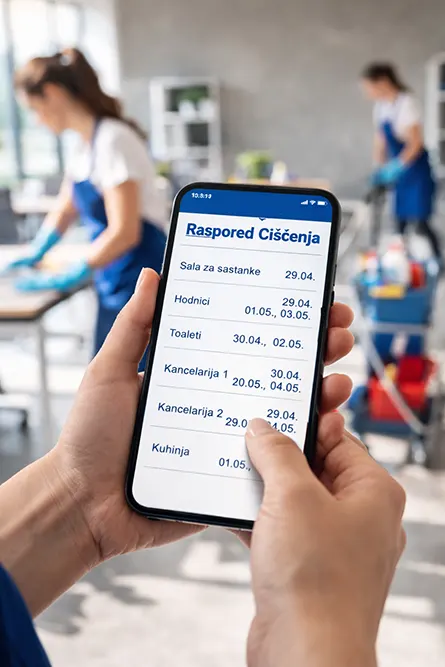
Photo: Invekta, hygiene maintenance in office space
Cleaning services – Industries with zero tolerance for error
In some sectors, cleanliness is not a matter of reputation but of safety. The pharmaceutical industry, food production, and the healthcare sector require precise maintenance of space hygiene.
In these environments, even minimal contamination can cause serious consequences. Therefore, protocols are applied that ensure controlled conditions at all times.
This level of discipline is becoming a model adopted by other industries as well. Standards from high-risk sectors are being transferred into corporate offices, logistics centers, and commercial facilities.
The trend is clear. The line between basic and premium standards is disappearing.
The psychology of trust in business spaces
When a client enters a room, their brain evaluates the environment faster than they consciously realize. A clean space automatically signals professionalism, organization, and reliability.
This means that professional cleaning of business premises also affects sales results. The environment becomes part of brand communication.
Presentation can convince. The space confirms.
Cleaning services – Sustainability as a new dimension of hygiene
The future of hygiene maintenance also includes an environmental aspect. Companies are increasingly demanding agents that are effective, but safe for people and the environment.
A sustainable approach means:
- rational use of resources
- optimized cleaning processes
- controlled use of chemicals
This model does not reduce quality. On the contrary. It increases it by introducing discipline and precision into every phase of maintenance.
Example of transformation from practice
A company with multiple office locations was facing inconsistent cleanliness standards. After introducing a professional model of cleaning services, all facilities were aligned.
Result:
- identical hygiene level across all locations
- fewer employee complaints
- a better impression on clients
The change did not come from greater effort. It came from a better approach.
Cleaning services – What awaits us in the coming years
Trends clearly show the direction of development:
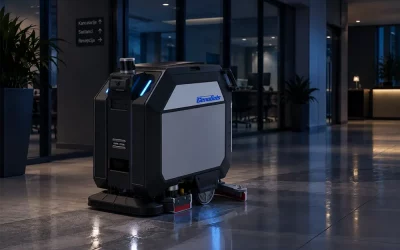
- automated processes
- smart cleaning planning
- standardization of quality
- measurable results
Hygiene is moving from a cost category into an investment category. Companies that understand this gain a competitive advantage earlier.
The future belongs to organizations that view space as a strategic resource.
The future of hygiene in the workplace is not in stronger agents or more frequent cleaning. It lies in a smarter approach.
An approach that guarantees a stable standard regardless of the type of facility. A model that combines analysis, precision, and consistency. A partnership that understands business needs, not just surfaces.
Because a high-quality work environment does not happen by chance.
It is planned.
If you want your business space to meet the standards of the future today, now is the right time for the next step. Contact us here for a facility assessment and find out how professional cleaning services can improve the performance of your space, employees, and overall business.
Frequently asked questions
What does professional cleaning services include?
It includes planned cleaning procedures, quality control, standardized protocols, and a maintenance regime tailored to the type of facility.
How often should office hygiene maintenance be performed?
The frequency depends on the number of employees, the frequency of space usage, and the types of surfaces. A professional assessment determines the optimal schedule.
Why do companies outsource hygiene maintenance?
Due to consistent quality, cost control, professional staff, and measurable results.
Which industries require the highest level of hygiene?
Healthcare, pharmaceuticals, the food industry, and production facilities with controlled conditions.
How does hygiene affect business operations?
It affects employee productivity, brand reputation, health safety, and the long-term sustainability of the space.



0 Comments