

Office cleaning and hygiene maintenance – A real-life situation from practice
In most offices, people take cleaning for granted. The space looks acceptable, staff empty the waste, clean the floors, and maintain the toilets. At first glance – everything functions.
However, after just a few months, subtle signals begin to appear that management often ignores: toilets are constantly “on the edge”, the kitchen quickly loses order, consumables disappear faster than planned, and employees increasingly comment on hygiene among themselves.
Nothing is dramatic.
But the system is clearly not working as it should.
Office cleaning and hygiene maintenance – Where the problem actually arises
The problem with office cleaning and hygiene maintenance is rarely in the cleaning itself.
Most often, it lies in organization.
In practice, the same patterns appear:
- no one clearly defines what “clean” means
- it is unclear who controls quality
- consumables are used without any monitoring
- people treat cleaning as a necessary expense, not as a process
The result is well known:
- the space is never consistently tidy
- costs increase, but quality does not
- responsibility is unclear
Why this problem keeps repeating
From the perspective of someone who works in the cleaning industry, the cause is almost always the same.
Office cleaning is introduced once – and then forgotten.
There is no:
- measurement
- adjustment to the number of employees
- control of consumption
- real analysis of the space’s needs
Office space is not static.
The number of people changes, the way of working changes, team structure changes, and even room layouts change. The hygiene maintenance system, however, often remains the same for years.
That is when an imbalance arises between needs and resources.
And this is precisely where problems begin that everyone “feels”, but no one defines precisely.
What well-organized hygiene maintenance actually means
Proper office cleaning and hygiene maintenance is not a question of the strength of cleaning agents or the frequency of floor cleaning.
It is a question of system.
In practice, a functional system implies:
- clearly defined zones (work areas, toilets, kitchen, common areas)
- different cleaning regimes by zone
- precisely defined maintenance dynamics
- controlled consumption of consumables
- a clear point of responsibility
When these elements are not clearly defined, an office may look “okay”, but never consistently orderly.
Related topics: Cleaning and hygiene maintenance in coworking spaces and hubs: how to maintain order in a space that is never the same two days in a row?
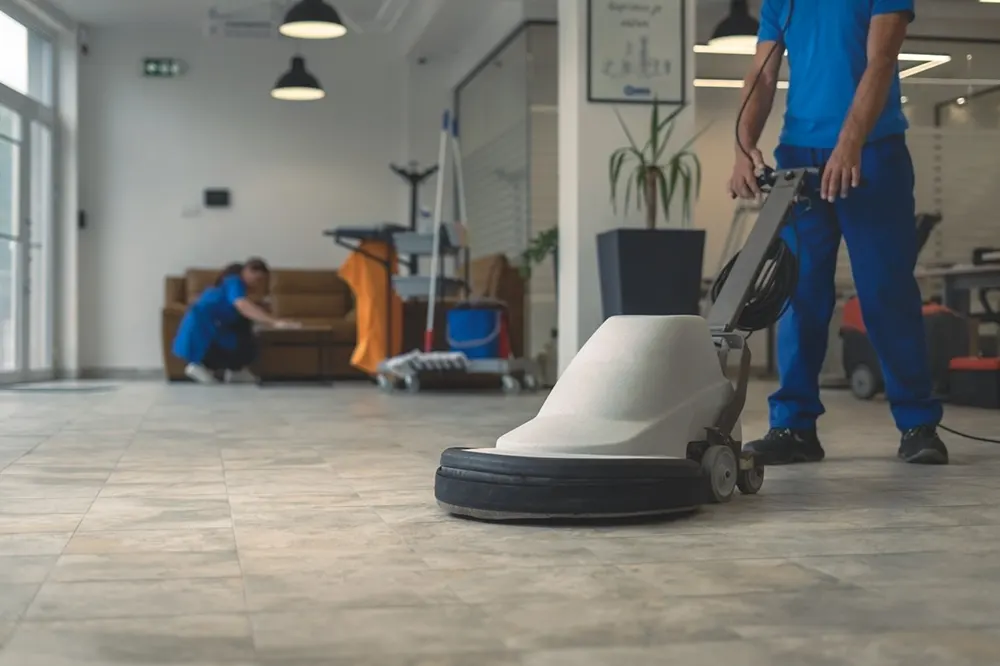
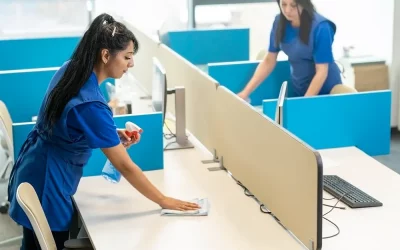
Photo: Invekta, office cleaning and hygiene maintenance
Office cleaning and hygiene maintenance – Cost control without compromising quality
One of the biggest fears among companies is that better hygiene also means higher costs.
In practice, it is often the opposite.
The greatest losses arise from:
- uncontrolled consumption
- incorrectly selected equipment
- misalignment between needs and solutions
When you introduce a clear system, costs become predictable.
Management knows exactly:
- how much of what is being used
- where deviations occur
- what can be optimized
This brings peace of mind and operational security.
What this looks like in practice (an office space example)
In a medium-sized office with around 60 employees, the issue was constant complaints about toilets and the kitchen.
Although the cleaning team worked every day, employees felt that hygiene did not “hold” throughout the day.
An analysis of the space determined:
- uneven consumption of consumables
- the same cleaning regime for all zones
- lack of control during the working day and across shifts
The solution was not more frequent cleaning, but rather:
- a different maintenance schedule by zone
- clearer control of consumption
- adapting the system to the real number of users
The result:
- a consistently orderly space
- fewer employee complaints
- better cost control
Office cleaning and hygiene maintenance – The role of management in hygiene maintenance
People often overlook one important thing.
Hygiene in office space is not just a technical issue.
It is part of organizational culture.
When management clearly sets standards and shows that it cares about how the space functions, employees recognize it.
At that point, hygiene maintenance ceases to be “someone else’s job” and becomes part of everyday order.
How to start improving the system
The first step is not changing suppliers or increasing the budget.
The first step is analyzing the current situation:
- how the space is used
- where problems arise
- where control is being lost
Only after that does it make sense to make decisions.
A conversation or assessment often reveals where control is being lost and how the space can be organized more efficiently. Call +381 66 811 83 80.

Photo: Invekta, office cleaning and hygiene maintenance
Office cleaning and hygiene maintenance – Conclusion
Office cleaning and hygiene maintenance should not be a source of frustration, unclear costs, and constant minor problems.
When set up as a system, it becomes a stable, predictable, and functional part of everyday business operations.
It does not require spectacular solutions.
It requires an understanding of the space, the people, and real needs, as well as good organization.
Hygiene maintenance in office space does not have to be a recurring topic “when something goes wrong”.
When established as a system, it becomes unobtrusive, stable, and under control. If you are considering whether your current maintenance approach is sustainable in the long term, the right moment to exchange experiences is before bigger problems arise. Call +381 66 811 83 80.

0 Comments