

Cleaning and hygiene maintenance in IT companies – A real-life situation from IT offices. IT companies are specific.
A large number of people in the office, open-space layouts, shared kitchens, constant use of equipment, and long periods during which employees remain in the space throughout the day.
At first glance, everything appears orderly.
However, after just a few months, recurring problems begin to surface: toilets are clean in the morning but do not last the entire day, the kitchen quickly loses order, consumables disappear faster than planned, and employee dissatisfaction grows quietly, without formal complaints.
Nothing is “on fire”.
But the system is clearly not adapted to the real way an IT company operates.
Where the problem arises in cleaning and hygiene maintenance in IT companies
With cleaning and hygiene maintenance in IT companies, the problem rarely lies with the people who actually perform the cleaning.
Most often, the issue is that the space is treated the same way as a traditional office.
In practice, this means:
- the same cleaning regime regardless of the number of employees
- lack of control during the working day
- absence of clearly defined standards by zones
- complete absence of consumption monitoring
IT companies have a different work dynamic, yet the hygiene system often remains generic.
And why do problems in IT offices keep recurring?
- IT companies grow rapidly.
- Teams expand, hiring is frequent, seating arrangements change, and the office is used more intensively than originally planned.
However, cleaning and hygiene maintenance in IT companies is rarely adapted to these changes.
The most common causes are:
Hygiene is not set up as a process.
Cleaning is introduced, a contract is signed, and it is assumed that the system will function on its own.
Without measurement and adjustment, quality inevitably begins to fluctuate.
There is also unclear responsibility. When a problem arises, no one knows exactly whether it is an operational, organizational, or communication failure, but in well-organized companies for cleaning and hygiene maintenance, it is clearly defined who is responsible and how tasks are carried out… and there are also software solutions that help cleaners perform specific tasks accurately and precisely, as well as control of completed work, reducing errors to a minimum.
And if you still do not have monitoring of consumable usage, it can happen that consumption explodes without a clear picture of where and why costs are increasing.
Specific characteristics of IT offices that affect hygiene
For cleaning and hygiene maintenance in IT companies to function, the way of working must be understood.
Employees in IT companies spend most of the day in the office, often longer than standard working hours. Long stays of employees in the space make thorough cleaning during the workweek difficult. There is also a large number of shared touchpoints ..keyboards, desks, chairs, kitchen elements, coffee machines, refrigerators – everything is used intensively, which is why cleaning and hygiene maintenance in IT companies may require additional work. The weekend can be used for deep cleaning and preparing the space for a new working week.
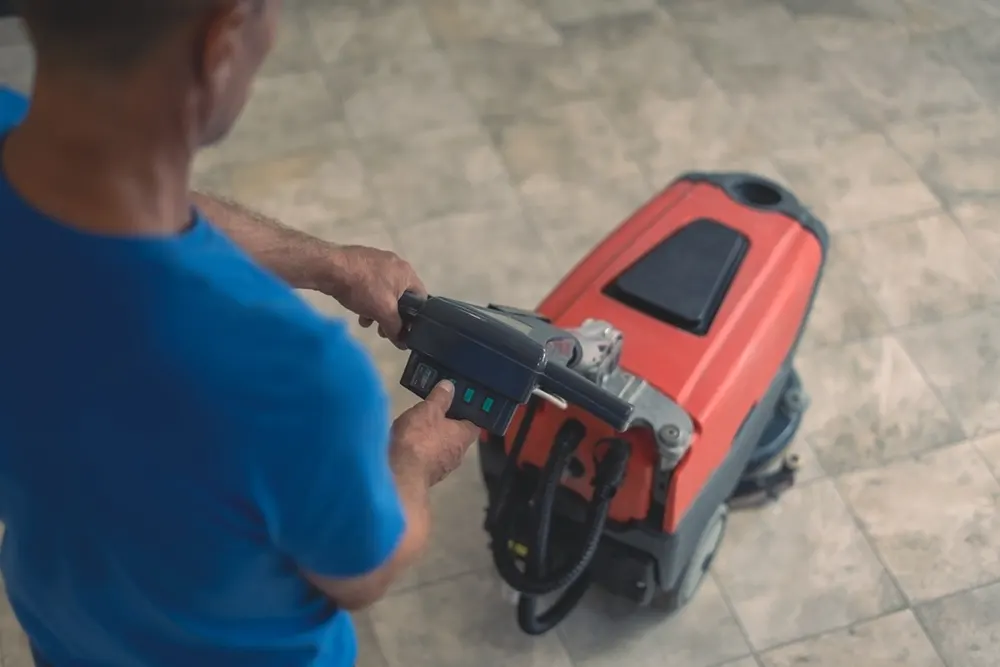
Photo: Invekta, cleaning and hygiene maintenance in IT companies
What a well-structured system of cleaning and hygiene maintenance in IT companies looks like
An efficient system does not mean more cleaning. It means smarter cleaning. Clearly defined zones, as workspaces, toilets, kitchens, meeting rooms, and common areas cannot have the same maintenance regime.
The dynamics differ by zone. Some zones require interventions during the day, others only regular maintenance. Once it is clear how and when consumption is monitored by zone, costs become predictable.
Cost control in IT companies as well as cleaning and hygiene maintenance in IT companies without compromising quality:
In the IT sector, employees are a key resource. Poor hygiene affects not only impression, but also satisfaction and focus.
Paradoxically, the absence of a maintenance system most often increases costs.
When structure is introduced:
- unnecessary losses are reduced
- budget planning becomes easier
- quality becomes stable
Example from practice: a growing IT company
An IT company with around 120 employees faced constant comments regarding kitchen and toilet hygiene.
Although cleaning was performed daily, the space did not last the entire day.
The analysis determined:
- the number of employees doubled within 18 months
- the maintenance system remained the same
- consumption was not controlled
The solution was found in:
- redefining zones
- adjusting maintenance dynamics
- clearer process control
The result:
- stable hygiene
- fewer internal complaints
- better cost control
Povezane teme: Office cleaning and hygiene maintenance
The role of management in correlation with cleaning and hygiene maintenance in IT companies
In IT companies, corporate culture carries significant weight. When hygiene maintenance is established as part of organizational responsibility, and part of that responsibility is then transferred to an outsourced contractor, results are long-term.
Management does not need to deal with details, but it must insist on results.
How to begin improving the hygiene system?
The first step is understanding the real situation:
- how the space is used
- where problems arise
- where control is lost
The second step is changing a supplier that lacks a system.
Only then are correct decisions made, and the system begins to work for you.
If you want to improve hygiene in an IT environment through a clear system and measurable results, call us at +381 66 811 83 80 and schedule a conversation.

Photo: Invekta, cleaning and hygiene maintenance in IT companies
Conclusion
cleaning and hygiene maintenance in IT companies must follow growth dynamics, working methods, and employee expectations.
When established as a system, hygiene ceases to be a topic only when something goes wrong.
It becomes a stable part of everyday business operations.
For additional information on a systematic approach to hygiene maintenance in IT companies, you can contact us at +381 66 811 83 80.



0 Comments