

How does a cleaning robot transition between different floor types? A cleaning robot can transition between different floor surfaces only when the specific surface and cleaning method are intended for that type of robot. Moving from tiles to another hard floor is not the same as moving from a hard floor to carpet: in that case, the robot’s function, brushes, vacuuming system, and permitted operating mode all matter.
If you want a broader overview of how autonomous robots operate in different facilities, which tasks they can perform, and what matters when choosing the right solution, read our guide Cleaning robots for commercial spaces.
Does the robot automatically continue cleaning when it moves onto a different type of floor?
You should not assume that every robot automatically detects a new type of floor and independently selects the appropriate cleaning method. Autonomous navigation allows the robot to follow a planned route, but whether a surface is compatible with washing, vacuuming, or sweeping depends on the specific model and its intended purpose.
A good example is the SP50, which, according to the manufacturer’s specifications, is designed to operate on both hard floors and carpets. However, this does not mean that the scrubber-dryer models L3, L4 and L50 offer the same capability, as they use a brush, water, and a floor-washing and drying system.
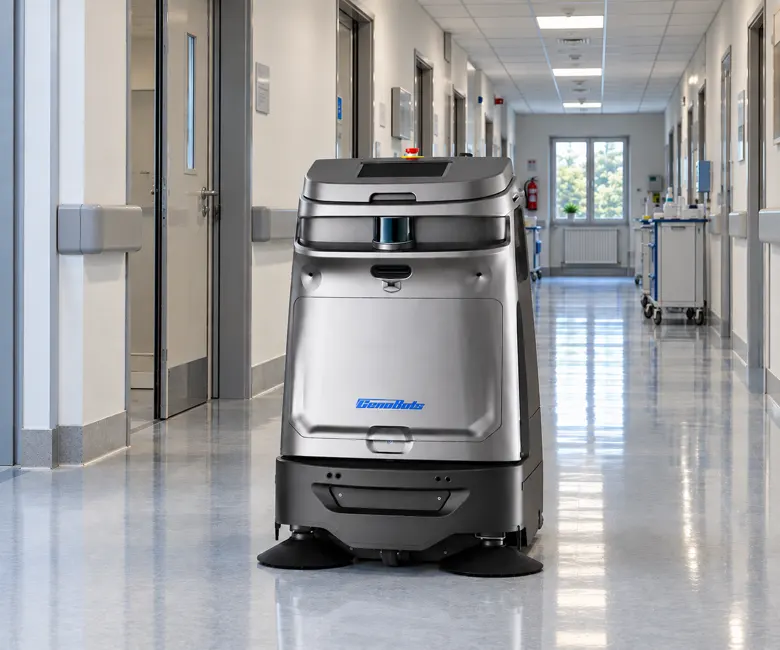
This is an important distinction between navigation and the cleaning process. A robot may follow a mapped route that includes different areas of a facility, but that alone does not mean that the same cleaning method is suitable for every surface.
What happens when the robot moves between different hard floors?
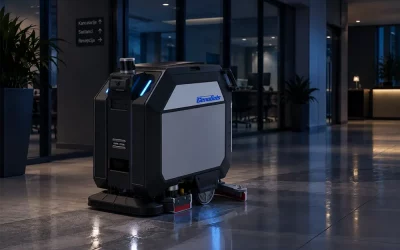
When moving, for example, from tiles to vinyl or another compatible hard floor, the most important factor is that both surfaces suit the operating method of the specific robot. The L3, L4 and L50 models belong to the category of autonomous scrubber-dryer robots, meaning they use a floor-washing and drying system. With these models, you should also check the requirements of the flooring itself, because water, cleaning agents, and the mechanical action of the brush are not equally suitable for every material
Surfaces that are sensitive to moisture or mechanical action require particular care. Before wet cleaning, you should check the flooring manufacturer’s recommendations and confirm that the cleaning method, brush, and cleaning agent are suitable for the specific surface.
In other words, “hard floor” is not a single uniform category when choosing a cleaning method.
Can the same robot move from a hard floor to carpet?
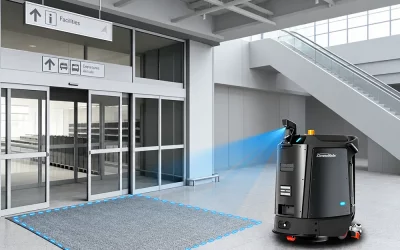
Yes, but only if it is designed to operate on both types of surfaces. SP50 is designed to vacuum both hard floors and carpets, so it can operate in facilities where these surfaces alternate. Unlike scrubber-dryer models, it does not use wet floor cleaning but removes dust and debris through vacuuming.
The guidelines from The Carpet and Rug Institute for commercial spaces also identify regular vacuuming as a fundamental part of proper carpet maintenance.
Is it better to use two different robots for mixed flooring?
Not always. If one model supports all the surfaces and the type of cleaning the facility requires, an additional robot may not be necessary. However, when a facility requires both daily carpet vacuuming and deeper wet cleaning of hard floors, combining robots designed for different purposes allows each one to perform the task it was designed for.
In facilities with different types of flooring, you can therefore combine robots with different purposes: a vacuum model for surfaces intended for vacuuming and a scrubber-dryer for suitable hard floors where wet cleaning is permitted.
This approach is more precise than trying to make one technology perform every task.
What should you check before a robot operates on multiple types of flooring?
Before operation begins, you should determine which floor surfaces lie along the planned route, whether the manufacturer lists them as compatible with the specific robot, and which maintenance procedure the flooring manufacturer permits. Wood, laminate, and other surfaces that are sensitive to moisture, chemicals, or the mechanical action of a brush require particular attention.
You should also check transitions between zones. Thresholds, changes in floor level, and other physical characteristics of the space are not the same as changes in surface material and must fall within the technical capabilities of the specific robot.
For that reason, the selection process does not end with the question of how many square metres the robot can clean – the flooring and the cleaning method must be compatible with each other.
How does a cleaning robot transition between different floor types?- FAQ
Can a cleaning robot operate across grout lines between tiles?
Yes, provided that the grout lines do not create an obstacle greater than the specific model can safely overcome. Standard grout lines between properly installed tiles generally form part of a level floor surface. However, pronounced unevenness, damaged tiles, or larger differences in height should be assessed against the technical limitations of the specific robot.
Does the robot need to remap the space if the floor covering changes?
Not necessarily. If the change in floor covering does not alter the layout of the space, walls, passageways, or other elements that define the route, a new map may not be necessary. However, before continuing operation, you should check whether the new surface is compatible with the robot and the configured cleaning method.
Should the robot’s brush be changed depending on the type of floor?
It depends on the model and the floor surface. For floor-washing robots, you should match the appropriate brush or other consumable component to the characteristics of the floor and the manufacturer’s recommendations. Particularly with more sensitive surfaces, you should avoid combinations that could damage the floor’s finish.
Different floors require different approaches. The right robot is the one that suits the space, surface, and task it needs to perform. Explore the models and find a solution that naturally fits your space.
About the author:
Milja Tonić – SEO Content Strategist & Copywriter
Milja Tonić is an SEO Content Strategist and Copywriter who specialises in creating expert content in the fields of facility management, professional maintenance of commercial facilities, and cleaning process automation.
Through research, SEO strategy, and original content development, she creates content about professional hygiene, facility management, and the use of autonomous cleaning robots in different business environments.


0 Comments