

How does a cleaning robot track cleaned areas? The robot uses LiDAR, 3D cameras, and mapping systems to determine its position within a digital map and track its progress along the planned cleaning route. The navigation software connects its current position with the areas it has already covered and those that remain, allowing the robot to cover the floor systematically with minimal unnecessary overlap.
In other words, the robot does not track cleaned areas by visually assessing whether the floor looks clean. During the task, the system primarily connects three types of information:
- where the robot is
- where it has already been
- and which areas it still needs to clean according to the plan
NIST (National Institute of Standards and Technology) identifies localization, mapping, autonomous exploration, and obstacle avoidance as key capabilities tested in autonomous mobile robotic systems. These functions allow the robot to connect sensor data with the map and track its movement while completing the task
This combination enables systematic cleaning of large commercial spaces. Mapping and route tracking represent only part of the technology behind modern commercial cleaning robots.
How does the robot map the area it needs to clean?
The robot uses LiDAR, 3D cameras, and other sensors to detect walls, shelves, columns, passageways, and other elements in its surroundings. The collected data forms a digital map of the area, while SLAM technology allows the robot to build or update the map and determine its position within it at the same time.
SLAM stands for Simultaneous Localization and Mapping. It represents one of the key principles of autonomous navigation because it allows the robot to connect its movement with specific coordinates and elements within the space. For example, CenoBots L3 uses 96-channel 3D LiDAR and AI navigation to map spaces, plan routes, and move through complex commercial environments.
The map is therefore more than a digital floor plan. It becomes the foundation the robot uses to plan and complete the cleaning task.
How does the robot know its current location?
The robot determines its current position by comparing the data collected by its sensors with the digital map of the area. LiDAR, cameras, and other sensors continuously scan the surroundings, while the navigation system uses this information for localization. This allows the robot to track its position as it moves and follow the planned route.
This capability is particularly important in large facilities where corridors, passageways, or rows of shelves may look very similar.
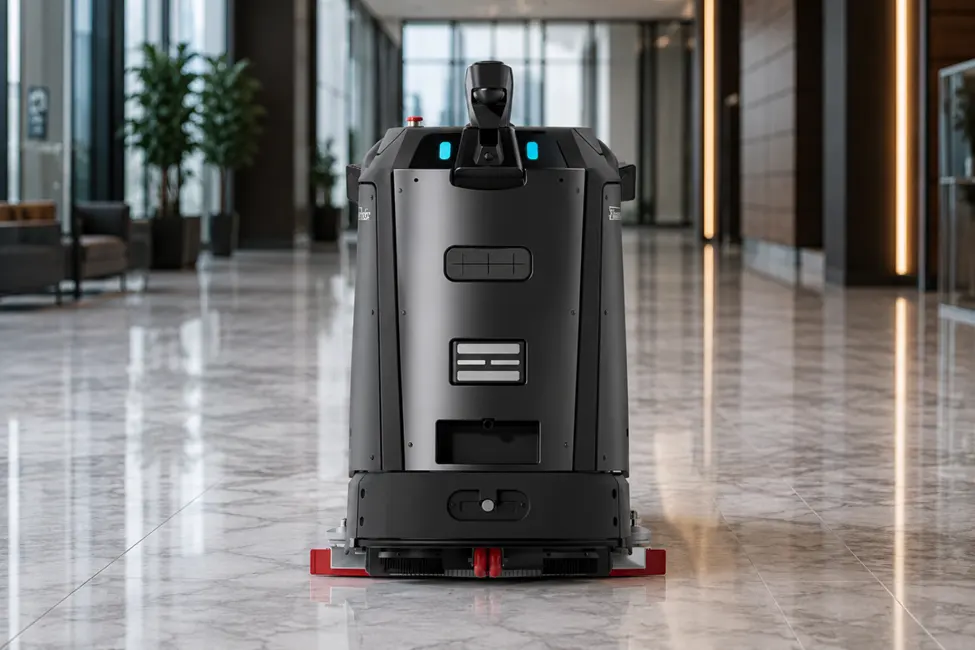
Table: How does the robot track floor coverage during cleaning?
| Information tracked by the system | What it tells the robot | Why it matters |
| Digital map | What the space looks like and where the planned cleaning zones are located | Provides the basis for task planning |
| Current position | Where the robot is in relation to the map | Allows the system to track movement through the facility |
| Completed route | Which sections of the planned route the robot has already covered | Reduces unnecessary repeated passes |
| Uncovered areas | Parts of the task that the completed route has not covered | Guides subsequent passes |
| Temporary obstacles | Which part of the planned route is currently inaccessible | Allows the robot to adjust its route |
| Coverage map / report | Which areas the robot covered during the completed task | Helps the operator verify cleaning coverage |
What happens if an obstacle appears in the robot’s path?
If a person, trolley, pallet, or another object appears during cleaning, the sensors detect the obstacle in real time. The robot can slow down, stop, or change its route to avoid it safely, then continue the task when conditions allow.
This capability allows robots to operate in spaces that remain occupied during cleaning.
It is particularly important in supermarkets, airports, shopping centres, hospitals, and logistics centres, where people, trolleys, and other equipment may enter a route that was clear only moments earlier.
We explain in greater detail how sensors detect people and objects and how the robot decides whether to slow down, stop, or change its route in the article How does an autonomous cleaning robot avoid obstacles and people?
What happens if the robot stops cleaning because of its battery or water level?
For models with a compatible workstation, an interruption caused by a low battery or depleted consumables does not necessarily end the task. CenoBots S5, for example, can automatically return for charging and then resume its previous task, while the L3 paired with the WS3 workstation can automate battery charging, clean-water refilling, wastewater drainage, and detergent refilling.
Does the robot know that the floor is clean, or only that it has passed over it?
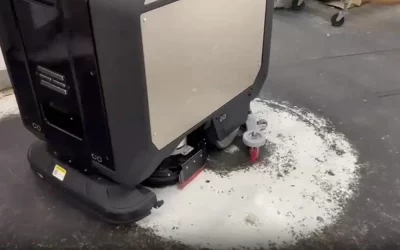
The robot does not necessarily know that the floor is clean simply because it has passed over it. A standard navigation system primarily records which areas the robot has covered along its planned route. Advanced AI features can add information about the dirt itself: CenoBots S5 uses Spot Cleaning to target areas with larger amounts of localized debris, while SP50 uses visual debris detection and Cleaning Result Checkup (CRC) to verify cleaning results.
How does a cleaning robot track cleaned areas? – FAQ
What happens to the map when the robot completes the task?
After the robot completes the task, the basic map of the area remains stored and available for future cleaning cycles. In systems that support reporting, the system can record completed route and coverage data separately, allowing the operator to check where the robot worked and how it completed the task.
Can the robot skip part of the floor because of an obstacle?
Yes. If a person, trolley, pallet, or another obstacle temporarily blocks the planned route, the robot can bypass that area and continue cleaning the accessible parts of the space. Depending on the navigation system, the robot may later attempt to return to the skipped area, while the completed route record shows which sections it did not clean.
Does the robot clean an area again after it has already passed over it?
Some overlap may occur, but the system plans the route to keep it to a minimum. The robot may need to overlap passes when turning, navigating around obstacles, or cleaning irregularly shaped spaces. The key difference is that the system tracks coverage and plans each pass instead of moving randomly.
Can the operator see which parts of the floor the robot did not clean?
Yes, if the robot’s system supports completed route tracking and floor coverage display. The operator can then see which areas the robot covered during the task and which remained uncovered, for example, because of an obstacle or an inaccessible passageway. This data helps verify cleaning coverage and plan an additional pass when necessary.
If you are considering how to simplify everyday operations, AI cleaning robots can handle routine tasks, giving your team more time to focus on work that requires human attention.
You do not need to know in advance which model you need. We are here to understand your space, operations, and requirements and work with you to find a solution that fits naturally into your business today and continues to support it as it grows.
About the author:
Milja Tonić – SEO Content Strategist & Copywriter
Milja Tonić is an SEO Content Strategist and Copywriter who specializes in creating expert content about facility management, professional commercial property maintenance, and the automation of cleaning processes.
Through research, SEO strategy, and original writing, she develops content about professional hygiene, facility management, and the use of autonomous cleaning robots in various commercial environments.

0 Comments