

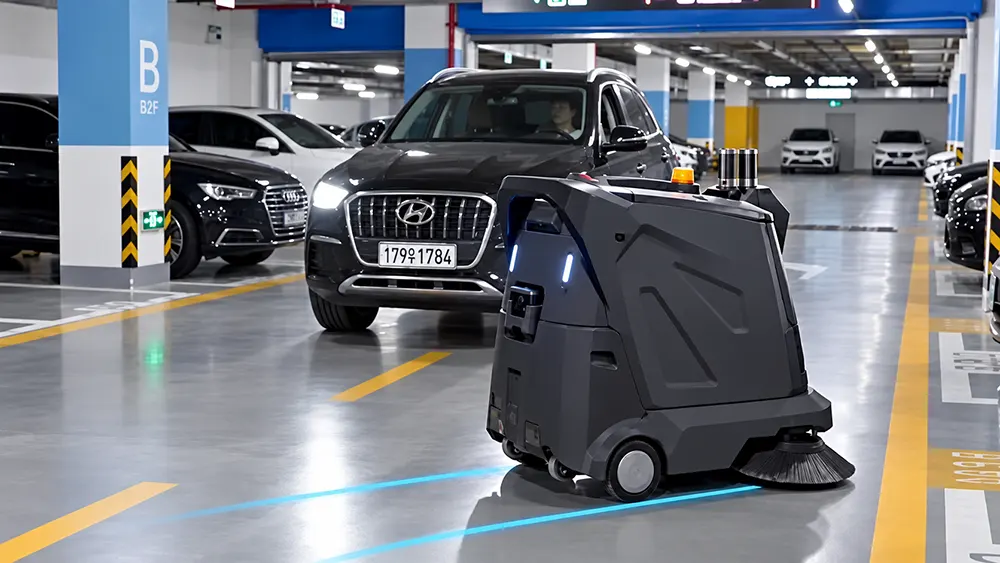
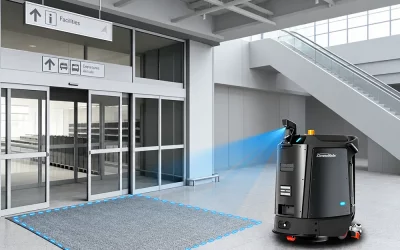
How to check if a robot has cleaned the area? You can check whether the robot has cleaned the designated area by combining the space map, completed route data, and the post-cleaning report. Depending on the model, 3D LiDAR, cameras, other sensors, and an AI computing platform help the robot localize itself, detect obstacles, and adjust its movement, while the available digital data allows the user to check how the robot completed the task.
How does the robot know where it has already been and where it still needs to clean?
The robot knows where it has already been thanks to the digital map, its own localization system, and the path-planning system, which allow it to track its position in relation to the designated zone. Based on this principle, robots for cleaning commercial spaces can systematically cover the planned area instead of moving randomly through the facility.
Reliable tracking of the completed route also depends on the robot’s ability to determine its own position in the space. NIST, in its research on the performance of mobile robotic systems, specifically highlights localization and SLAM (simultaneous localization and mapping) as important areas for measuring and verifying the performance of autonomous mobile systems.
What role does 3D LiDAR play in area coverage?
3D LiDAR helps the robot detect its surroundings and determine its position in the space, which is important for following the planned route. The system can detect walls, passageways, and objects that affect movement, allowing the robot to adjust its path to the actual conditions in the facility instead of blindly following a predefined line.
The map provides the robot with a basis for movement, but the environment does not remain static during operation. Sensors allow it to detect current conditions in its surroundings and respond to changes that were not present during mapping, such as people, carts, or other temporary obstacles.
What does NVIDIA AI do during autonomous cleaning?
In models that use it, the NVIDIA computing platform provides the processing power required to handle the data needed for the robot’s autonomous functions. Together with LiDAR, cameras, and other sensors, this platform allows the system to process information about its surroundings and support navigation, object recognition, and decision-making while moving.
The easiest way to understand this difference is: sensors collect data, while the computing system processes it.
What happens if the robot encounters a pallet, cart, or people?
If a pallet blocks a passage during cleaning, that part of the floor may temporarily remain inaccessible. A robot with an appropriate obstacle detection system can detect the change in its surroundings and adjust its movement, but it cannot clean a physically blocked area while the obstacle remains on it.
This is one of the most important things to understand when evaluating the results of autonomous cleaning.
Does a “completed” status mean that every part of the floor is clean?
No. A completed task status indicates that the robot has finished the defined mission, but it does not automatically confirm that every part of the floor was accessible or that the robot removed every type of dirt. For a more realistic assessment, you should combine the task status, coverage data, and, when necessary, a visual inspection of the results.
There are actually three different questions: whether the robot completed the mission, whether it could access the planned areas of the floor, and whether it achieved the desired level of cleanliness after passing through them.
Digital data provides the best answers to the first two questions. The third may depend on the type of dirt, flooring, operating mode, and other conditions.
Therefore, it is more accurate to say that the system provides verifiability of task completion rather than claiming that the digital map alone proves that the floor is perfectly clean.
How can the responsible person check the robot’s work without following it?
The responsible person does not need to physically follow the robot through the facility to monitor its work. With models that support a mobile application, users can track movement, current location, available operating data, and notifications about completed tasks. This allows them to monitor part of the robot’s operation without constantly supervising it on-site.
Table: What are you actually checking after different robots complete their work?
| Model | Robot task | What to check after the task | What not to confuse with coverage |
| L3 | Washing and drying hard floors | Whether the robot washed the planned zone and whether the result meets the requirements of the selected operating mode | A completed route alone does not show how much stubborn dirt the robot removed |
| L4 | Washing and drying hard floors | Whether the robot covered the accessible parts of the planned zone and what cleaning result it achieved | Area coverage and cleaning quality are not the same type of data |
| L50 | Washing larger hard-floor areas | Whether the robot completed the planned task and whether the result meets the needs of the large zone | A large covered area does not automatically mean that the robot removed every localized contaminant |
| S5 | Sweeping and collecting dry debris | Whether the robot removed the expected amount of dust and loose debris from the accessible area | You should not assess sweeping results in the same way as floor-washing results |
| SP50 | Vacuuming and sweeping hard and soft floors | Whether the robot covered the planned zone and removed the detected dirt in accordance with the task | Spot Cleaning is an additional function and should not be treated as equivalent to a complete planned task |
How to check if a robot has cleaned the area?- FAQ
Does the type of floor affect autonomous cleaning results?
Yes. The result depends on the type of floor, its texture, the condition of the surface, and the cleaning method for which the robot is designed. Hard floors, carpets, and other surfaces do not require the same procedure, so it is important to choose a model and operating mode that match the specific flooring in the facility.
Can the robot clean areas along walls and edges?
It depends on the design and capabilities of the specific model. The robot’s working width and minimum cleaning distance from the edge determine how close to the wall it can clean the floor. Therefore, when choosing a robot, you should check its edge-cleaning specifications, especially in facilities with many walls, shelves, and narrow passageways.
How often should you change or adjust the cleaning plan?
You should adjust the cleaning plan when the layout of the space, the intensity of use in individual zones, or the facility’s needs change significantly. A zone with low traffic during one period may later require more frequent maintenance, so you should align the robot’s operating schedule with the actual way the space is used.
A clean floor is the result. Control over the process is what makes the difference.
About the author:
Milja Tonić – SEO Content Strategist & Copywriter
Milja Tonić is an SEO Content Strategist and Copywriter specializing in creating expert content in the fields of facility management, professional maintenance of commercial facilities, and cleaning process automation.
Through research, SEO strategy, and original content development, she creates content about professional hygiene, facility management, and the use of autonomous cleaning robots in various business environments.

0 Comments