


A cleaning robot in a dynamic environment works by distinguishing between two different situations: a temporary obstacle in its path, which it handles independently while operating, and a more permanent change in the layout, which alters the route it follows. This adaptability allows commercial cleaning robots to operate in facilities whose layouts are not entirely static.
The remaining question is not whether the robot can continue operating, but what happens to a specific route when the passage it previously used no longer physically exists and the change still requires an operator’s decision.
What happens to the route when the previous passage no longer exists?
When a layout reorganisation makes part of the previous route physically inaccessible, the system generates a new path through passages that remain available in the facility’s current layout instead of attempting to follow the old route as though the space had not changed.
Mobile service robot navigation includes capabilities such as obstacle detection and avoidance, path tracking, movement through narrow passages and mapping accuracy, which ISO 18646-2:2024 lists among the criteria for assessing navigation performance.
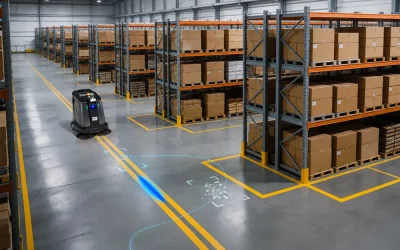
Imagine a situation in which a direct passage previously connected two zones. However, following a reorganisation, a new shelving unit now occupies that space. The old path no longer corresponds to the physical layout.
Instead of relying on a single, unchangeable route, the system combines an updated representation of the space with new path planning. This allows the robot to use passages that actually exist rather than those that existed during the initial mapping process. The CenoBots video demonstration shows how autonomous navigation works while a CenoBots robot operates in a real environment.
When does a change in the layout require operator intervention?
The operator must intervene when a change affects WHAT the robot needs to clean: cleaning zones, restricted areas or the designated use of part of the space, rather than simply HOW it reaches them. As a rule, the system independently adjusts the route when a passage disappears. However, the operator must confirm or modify any changes to work zones and tasks.
This distinction matters because automatic route adjustment does not mean that the robot automatically makes operational decisions about where it may or may not work. For example, if a section of a warehouse that previously formed part of the regular route becomes a hazardous-material storage area, the system should not independently decide whether it should continue cleaning that zone. The operator makes that decision and then updates the defined zones on the map.
Does a change in layout affect the time required for cleaning?
Yes. If the new layout increases the distance between zones, narrows the available passages or requires the robot to avoid obstacles differently, the robot travels farther than before. As a result, cleaning the same area may not always take the same amount of time, even when the facility’s total floor area remains unchanged.
How does the operator monitor and manage these changes during operation?
With models that support a mobile application, such as the CenoBots L50, the operator can remotely monitor completed routes and task status. The operator can also modify cleaning zones or plans when changes within the facility require adjustments, without having to physically follow the robot throughout the entire space.
This level of oversight proves particularly useful when changes occur frequently. Examples include retail facilities where staff rearrange displays weekly or warehouses where workers change pallet layouts from one shift to the next. The operator does not need to wait for a change to disrupt the robot’s operation. Instead, the operator can review and adjust tasks in advance by using the data displayed in the application.
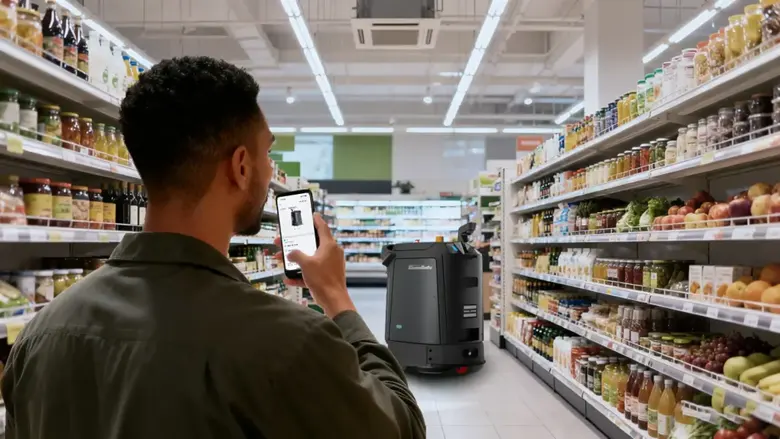
Table: How does the robot respond to different changes in the environment?
| Type of situation | Does the robot continue operating independently? | Does the situation require operator intervention? |
| A trolley or pallet temporarily blocks the passage | Yes– the robot avoids the obstacle and continues operating | No |
| A new shelving unit or partition has permanently removed the passage | Yes– the system updates the route if another path remains available | No, unless no alternative route exists |
| The designated use of part of the space has changed, e.g. a new storage zone has been created | Not necessarily– the existing task may no longer suit the new layout | Yes– the operator needs to review and, if necessary, modify the zones and tasks |
| A new zone that the robot did not previously clean has been added | No– the new zone does not form part of the previously defined task | Yes– the operator needs to define the zone and add it to the cleaning plan |
How does a cleaning robot in a dynamic environment work – FAQ
Does the robot need to stop cleaning as soon as it detects a change in the environment?
Not necessarily. If the sensors detect a change that does not prevent the robot from safely continuing the task, the robot adjusts its movement and continues operating. The robot only needs to stop the task when the available route no longer allows it to continue cleaning or when the change requires an operator’s decision.
Does the system record changes in the environment for subsequent analysis?
For models with a mobile application, the operator can monitor completed routes and task status over time. This gives the operator insight into how the robot’s operation has changed. Such information helps with planning future tasks in facilities where staff frequently reorganise the layout.
Does a longer route mean that the robot needs to return for charging sooner?
Possibly, depending on how much longer the route has become and how much battery capacity remains when the change occurs. Travelling farther consumes more energy when cleaning the same area, so facilities with frequently changing layouts should plan tasks with sufficient time and battery capacity in reserve.
A changing layout does not have to prevent autonomous cleaning, but it remains an important factor to consider when choosing a robot. If you want to assess how a specific model would perform in your facility, a discussion about the space, routes and operating requirements can provide the first step towards a solution that adapts to your daily operations.
About the author:
Milja Tonić – SEO Content Strategist & Copywriter
Milja Tonić is an SEO Content Strategist and Copywriter who specialises in creating expert content on facility management, professional maintenance of commercial facilities and cleaning process automation.
Through research, SEO strategy and original writing, she develops content on professional hygiene, facility management and the use of autonomous cleaning robots in various commercial environments.

0 Comments