


Commercial cleaning robot battery and charging directly determine how long a professional scrubbing robot can operate without interruption. This is one of the first questions every company planning to automate facility maintenance asks. The machine specification always states directly how long the battery will last before it loses capacity.
What clients need to understand is that the robot estimates this time itself, returns to the charging station on its own, and resumes the cleaning route exactly where it stopped. No one needs to directly and continuously monitor the charging and floor maintenance process with the commercial cleaning robots imported by Invekta.
What type of battery does the CenoBots L3 use?
It uses lithium iron phosphate cells, better known as an LFP battery. The capacity is 60 ampere-hours, which is enough for a full operating cycle without anyone having to physically open the cover and check the condition of the cells. Professional equipment commonly uses this type of battery chemistry because it withstands thousands of charging and discharging cycles before losing noticeable capacity.
How long does one charge last and how long does the charging cycle take?
A full battery provides up to four hours of continuous operation. This usually covers one standard cleaning shift in a small or medium-sized commercial facility. The charging cycle itself takes between one and a half and two hours. The exact time depends on how depleted the battery was when the device returned to its station.
This combination means that one overnight charge can regularly prepare the machine for the next working day without any additional waiting. Even when the previous shift was long and demanding.
How does automatic charging via the charging station work?
When the energy level falls below a preset threshold, the device automatically interrupts its route and returns to the connected station. Charging then begins without any operator command. The station detects when the battery is full and automatically stops the process.
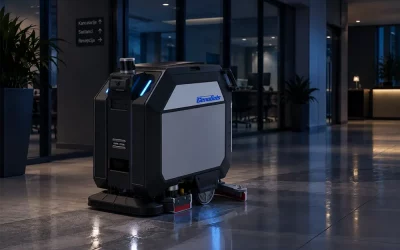
With the CenoBots L3, the WS3 workstation performs this role and does much more than charge the battery. The same device automatically refills clean water, drains dirty water from the tank, and replenishes the cleaning solution. This allows the robot to begin its next route fully prepared without a single manual intervention. For locations without direct access to a water supply, the optional WT3 mobile tank further extends operating time without the need for a hose.
There is no risk of overcharging if the machine remains docked longer than planned. The charging process operates completely independently of any human attention.
What happens if the energy level drops below the threshold in the middle of a route?
The machine does not abandon the task. Instead, it remembers the exact point where it stopped when the interruption occurred. After charging, it returns to that location and resumes cleaning instead of covering an already cleaned section of the floor again.
For larger facilities where one shift requires more than four hours of operation, this means the task naturally divides into two shorter segments separated by a brief charging break. There is no loss of time on remapping or repeating the same section of the floor.
Can the battery last through an entire night shift without supervision?
For most small and medium-sized facilities, one charge covers the entire job without interruption. Few spaces of this size require more than several hours of cleaning. If the schedule still requires a longer or split shift, the machine simply inserts a short charging break in the middle of the night, just as described in the article about how overnight robotic office cleaning works. In the morning, staff find the job completed without any indication that an interruption ever occurred.
Which factors extend battery life?
Extreme temperatures are the greatest enemy of battery longevity. The recommended charging and storage range is approximately 0 to 45°C, with the ideal range being considerably narrower.
Direct sunlight during charging and exposure to high temperatures accelerate cell degradation. Leaving the device completely discharged for an extended period has the same effect.
If the machine remains unused for weeks, for example during holidays or a facility shutdown, occasional charging is recommended rather than leaving the battery at zero until the machine returns to service. Likewise, using a non-original charger or cells from another manufacturer is not recommended. This can void the warranty and shorten battery life. This practice forms part of the broader preventive maintenance schedule described in the article professional cleaning robot maintenance: a complete guide.
Commercial cleaning robot battery and charging, a brief overview
The combination of LFP chemistry, short charging times, and an automatic station makes the battery an almost invisible part of everyday operation. This remains true as long as users follow the basic rules regarding temperature and regular charging.
Invekta imports the CenoBots L3 as part of its broader range of commercial cleaning robots and advises clients on charging schedules tailored to their specific facility.
Commercial cleaning robot battery and charging – Frequently asked questions (FAQ)
Does an LFP battery require manual maintenance?
No. Users only need to follow the recommended temperature ranges and avoid leaving the battery completely discharged for long periods. The device handles everything else, including monitoring charging cycles. Ignoring these few rules is the most common reason a battery loses capacity earlier than it should.
What if a company does not use the robot during annual leave?
The machine should receive an occasional charge during extended periods of inactivity. This is much better than leaving it switched off with an empty battery for weeks or months. Keeping the battery fully discharged for an extended period accelerates capacity loss. One short charge before returning the machine to service is enough to avoid this risk.
Does daily use shorten battery life faster than occasional use?
Not significantly. LFP chemistry is specifically designed to withstand a large number of charging and discharging cycles over a long period. Extreme temperatures and leaving the battery discharged for long periods pose a greater risk to its lifespan. Regular daily use, for which the device is designed, does not.
Does the battery level affect cleaning power during operation?
No, scrubbing and vacuuming performance remain the same throughout the entire cycle. This continues until the energy level falls below the threshold that triggers the automatic return for charging. The machine does not gradually slow down or reduce brush pressure as the battery discharges. Instead, it operates at full power until it automatically stops and returns for charging.
Contact Invekta to create the best operating and charging schedule tailored to your facility.
About the author:
Jasna Drenovac – Copywriter and SEO content strategist – Content creation specialist. With a focus on facility management and hygiene maintenance services, Jasna develops blogs, hub content, and SEO content. Her work combines years of writing and editing experience with modern SEO standards.
The expert articles on this blog result from research, analytical processing, and editorial authorship.



0 Comments