

How autonomous cleaning robots solve labor shortages? Labor shortages in cleaning are not a temporary inconvenience but a permanent shift in the labor market that facility managers deal with every day. Job vacancies for cleaners remain open for weeks. When companies finally fill a position, many new employees do not stay longer than a few months.
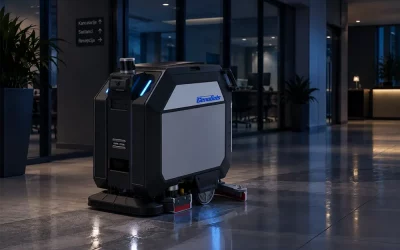
Autonomous robotic cleaning does not solve the entire recruitment problem, but it takes over precisely the part of the work that is hardest to staff and easiest to standardize within the broader range of commercial cleaning robots that Invekta imports.
Why is the labor shortage in cleaning becoming an increasingly serious problem?
Physically demanding work combined with shifts that often take place late in the evening or early in the morning makes this industry one of the hardest to staff in the labor market. According to ISSA, the worldwide cleaning industry association, labor shortages remain one of the most serious operational challenges that cleaning companies face today. Despite rising wages and increasingly aggressive recruitment.
The problem is not only the number of vacant positions but also the fact that every unfilled shift directly means that a certain area of the facility misses its scheduled cleaning that night or during that shift.
How does a robot fill the gap that a company cannot fill?
A robot does not wait for a recruitment process or quit after its first difficult shift. Once integrated into the schedule, it follows the same route every night regardless of whether labor market conditions are favorable that week. Alexander Feil, founder of FieldBots, a company that manages cleaning robot fleets around the world, explains this through simple business logic.
Companies first offer clients a traditional cleaning model based on human labor. Only later do they add the option for a robot to take over part of the floor area, specifically because of labor shortages or the need to clean the entire surface every day. Once companies include this in their official service offering, Feil says, automation becomes a genuine part of the business rather than just an experiment.
Does a robot replace cleaners or change their work?
The goal is rarely to replace people completely. Feil emphasizes that he has never seen a successful robot fleet without people managing it. Staff need to transport, install, maintain and supervise the robot just like any other piece of professional equipment. What actually changes is the distribution of tasks within the existing team.
The robot takes over routine scrubbing of large open areas, while staff remain responsible for everything that requires judgment, attention to fine details and direct work in areas the robot does not cover.
What tasks do staff take on when a robot handles routine cleaning?
Restrooms, staircases, glass, upholstered furniture and urgent interventions such as spilled liquids still require human attention regardless of how many robots operate in the facility. Staff can now redirect the time they would otherwise spend on lengthy corridor scrubbing to these tasks.
For companies struggling with staff shortages, this means that the existing team, no matter how small, can cover more square meters without additional recruitment.
Why does employee turnover make planning even more difficult?
High turnover in this industry affects not only the cost of rehiring but also the consistency of the service itself. Every new cleaner needs time to learn the layout of the facility, priority areas and client expectations. Companies repeat this onboarding period every time an employee leaves.
A robot never loses that consistency. The same mapped route, brush pressure and schedule remain identical regardless of how much the human team changes around it.
What does the experience of companies that have already combined people and robots show?
ISSA regularly reports proven practices from companies that introduced robotics specifically because of workforce pressures. Their experiences share one common point: technology works best when companies establish a clear division of labor. Companies that try to introduce a robot without a plan for who will operate and maintain it usually end up disappointed. Those that define this role within the team in advance quickly see the benefits.
This also matches Invekta’s experience of introducing robots for clients, where introducing a robot into a company works best when one person from the existing team takes responsibility for that role from day one.
How autonomous cleaning robots solve labor shortages, a brief overview
A robot does not fill every gap in the cleaning labor market, but it takes over precisely the part of the work that is hardest to staff and easiest to standardize. The rest of the team shifts its focus to tasks the robot cannot perform. The company gains consistency that does not depend on who currently works there.
How autonomous cleaning robots solve labor shortages – Frequently asked questions (FAQ)
Does introducing a robot mean laying off part of the cleaning team?
Rarely. In practice, companies usually introduce a robot precisely because they cannot fill existing positions. Not to reduce the team they already employ. Staff usually redirect the time they save to tasks the robot does not cover, such as restrooms and detailed cleaning.
How quickly can a robot fill the gap when a company cannot find a cleaner?
A robot starts working as soon as the company adds it to the schedule and maps it for a specific area. This usually takes a few days per zone. That makes a major difference compared with recruitment, where hiring and onboarding can take weeks.
Do smaller companies benefit from this solution at all, or only large systems?
Smaller facilities often benefit precisely because every unfilled working hour affects them more heavily. The compact L3 model, designed for smaller spaces, can take over routine cleaning without the need for additional recruitment. This is especially valuable when a company already operates with a minimal number of employees.
Who operates the robot if the company does not have a technical team?
Operating a robot does not require technical education or a dedicated team. One employee from the existing staff takes responsibility for scheduling and basic maintenance. Of course, the equipment supplier provides support when the robot requires more advanced intervention or servicing.
If your company feels the pressure of labor shortages in cleaning, contact us and let us consider together where a robot can provide the greatest support in your facility.
About the author:
Jasna Drenovac – Copywriter and SEO content strategist – Content creation specialist. With a focus on facility management and hygiene maintenance services, Jasna develops blogs, hub content and SEO. Her work combines many years of writing and editing experience with modern SEO standards.
The expert articles on this blog result from research, analytical processing and editorial work by the author.



0 Comments