


How to prepare your facility for a cleaning robot? Before the cleaning robot arrives, you need to:
- assess the premises
- determine which floor surfaces the robot needs to maintain
- check passageways and obstacles
- define the initial routes and work zones
- schedule cleaning times
The goal of this preparation is not to adapt the entire facility to the robot, but to establish clear conditions for mapping, testing and subsequent autonomous operation.
The introduction of commercial cleaning robots therefore does not begin with their first independent task, but with an understanding of how people use the facility throughout the day: where traffic is heaviest, which zones must remain accessible, and where the robot can operate most efficiently. This preparation is particularly important in warehouses, factories, healthcare facilities and supermarkets, where traffic patterns and intensity change throughout a shift.
This type of facility preparation, with clearly defined traffic flows, separate zones and predictable work organisation, also forms part of the broader workplace safety management practices promoted by OSHA (Occupational Safety and Health Administration) for warehouse and industrial facilities.
Should you designate zones that the robot must not enter in advance?
Yes. Before regular operation begins, you should identify surfaces that do not require cleaning or where you need to restrict the robot’s access. You can define these zones when setting up the map and operating parameters, giving the robot clear boundaries within which to perform its task instead of expecting it to determine the intended use of individual areas within the facility.
How should you prepare the robot’s routes in a busy facility?
You should plan routes according to how people actually use the facility, rather than simply choosing the shortest path between two points. Consider the main routes used by people and vehicles, peak traffic periods and areas where temporary obstacles frequently appear, so that cleaning fits into existing operations.
In a warehouse, for example, this means considering the movement of forklifts and transport trolleys. In a retail space, customers and stock replenishment are important, while a healthcare facility has its own flows of patients, staff and equipment.
An autonomous robot can detect an obstacle and adjust its path during operation, but good initial organisation reduces the number of situations in which its planned route unnecessarily crosses the busiest parts of the facility.
Should you determine in advance when the robot will clean?
Yes. You should schedule its operation for periods when the robot can clean the planned zones while causing minimal disruption to other activities. Depending on the facility, this may be a quieter period, the time between shifts or another part of the day when specific surfaces are more accessible for cleaning.
This does not mean that an autonomous robot must operate only when the facility is empty. Its sensors and navigation systems enable it to work in environments where people and other obstacles are present.
However, if pallets or vehicles occupy a passageway almost continuously during a particular part of the day, it makes more sense to schedule cleaning for a time when the area is more accessible. This approach combines the robot’s autonomy with effective operational planning.
Is it better to test the robot in one zone first?
Yes. A pilot zone allows you to test the robot in a representative part of the facility before expanding its use. During this phase, you can observe its movement, passageway accessibility, how the cleaning schedule fits into operations and how the robot functions alongside existing activities, then refine the initial settings as needed.
Where should you position the robot’s station?
You should position the station where the robot can access it reliably and where the location meets the requirements of the station type and its necessary infrastructure. Before installation, you should therefore check the available space for charging the cleaning robot, access to an electrical power supply and, for systems that support automatic water and detergent management, suitable conditions for connecting this equipment.
It is important to know in advance which station you will use, because they do not all perform the same functions.
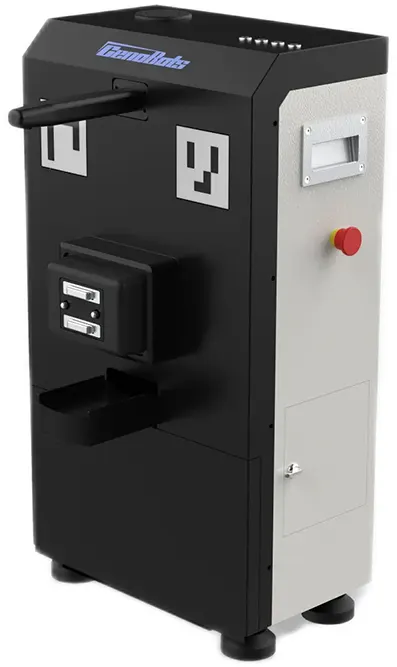
- The CCS-02 Charging Station provides automatic charging only. When the battery runs low, the robot returns to the station, recharges and resumes its previous task. It operates at temperatures from -10°C to 45°C and uses a standard voltage of 100–240 V.
- The CWS-01 Workstation combines four functions: charging the robot, refilling clean water, draining wastewater and replenishing detergent. Because it comes into contact with water, it operates within a slightly narrower temperature range of 0°C to 45°C.
- The CenoBots L3 offers the WS3 Workstation and WT3 Mobile Water Tank. The latter is particularly useful when a fixed water connection is impractical, as it allows the robot to operate without a direct installation at the cleaning location.
Should you prepare employees before introducing the robot?
Yes. Staff who will work with the robot should understand how to start it, monitor tasks, follow the defined work zones, respond to interruptions and carry out daily operational duties. Training forms part of the implementation process because autonomy reduces the need to control the machine continuously, but it does not eliminate the need for human supervision and cleaning coordination.
It is particularly important to determine in advance who is responsible for the robot. In a larger facility, this may be a member of the cleaning or facilities team who monitors task completion and responds when intervention is required.
Other employees do not need to operate the robot, but they should know that it works autonomously and avoid unnecessarily blocking its planned routes with equipment that they could store elsewhere.
Table: What to prepare before a cleaning robot arrives
Before the robot arrives, you need a clear understanding of the facility and its future operating procedures: which surfaces require cleaning, where physical restrictions exist, which zones remain outside the task, when the space is most accessible and who will manage the system. Only then should you proceed with mapping, a pilot test and the gradual introduction of the robot into daily maintenance operations.
| What to prepare | What to check before implementation | Why it matters |
| Cleaning surfaces | Which zones the robot needs to maintain | Defines the scope of the task |
| Passageways | The narrowest points, doorways and manoeuvring space | Shows whether the model physically fits the space |
| Restricted zones | Where the robot should not enter | Allows you to configure the map correctly |
| Traffic flows | People, trolleys, pallets, forklifts | Helps with route planning |
| Operating time | Shifts and peak traffic periods | Allows cleaning to fit more effectively into operations |
| Pilot zone | A representative part of the facility | Allows you to verify the settings before expansion |
| Station | Location, space and required infrastructure | Enables reliable docking and the functions of the specific station |
| Responsible person | Who monitors operation and responds when necessary | Ensures operational oversight |
How to prepare your facility for a cleaning robot?- FAQ
Should you remove cables, boxes and small objects from the floor before the robot starts working?
Yes, you should remove objects that do not form part of the facility’s usual layout from the planned cleaning surface whenever possible. Autonomous robots use sensors to detect obstacles, but the goal of preparation is not to “clear a path” for the robot. Instead, you should ensure that the space is in the condition intended for routine maintenance.
How long does the pilot phase usually last before full implementation?
The duration depends on the facility’s size and complexity, but the pilot phase should last long enough to demonstrate consistent results under real operating conditions, including changes in traffic across different days or shifts, before you decide whether to expand the robot’s use to the rest of the facility.
What happens if the pilot test shows that the robot cannot access part of the facility?
You should then determine whether a physical restriction within the space, the designated work zone, a temporary obstacle or the route configuration caused the issue. The pilot phase serves precisely to identify such situations before regular operation begins, allowing you to adjust the settings or assess whether another model would suit that particular zone better.
Every facility is different, and robots do not all need to operate under the same conditions. A good starting point is to understand the space, its routes and its daily dynamics. If you would like to see how CenoBots could fit into your facility, we can begin with a brief assessment of the premises.
About the author:
Milja Tonić – SEO Content Strategist & Copywriter
Milja Tonić is an SEO Content Strategist and Copywriter who specialises in creating expert content on facility management, professional maintenance of commercial properties and the automation of cleaning processes.
Through research, SEO strategy and original content development, she creates material on professional hygiene, facility management and the use of autonomous cleaning robots in a range of commercial environments.

0 Comments