

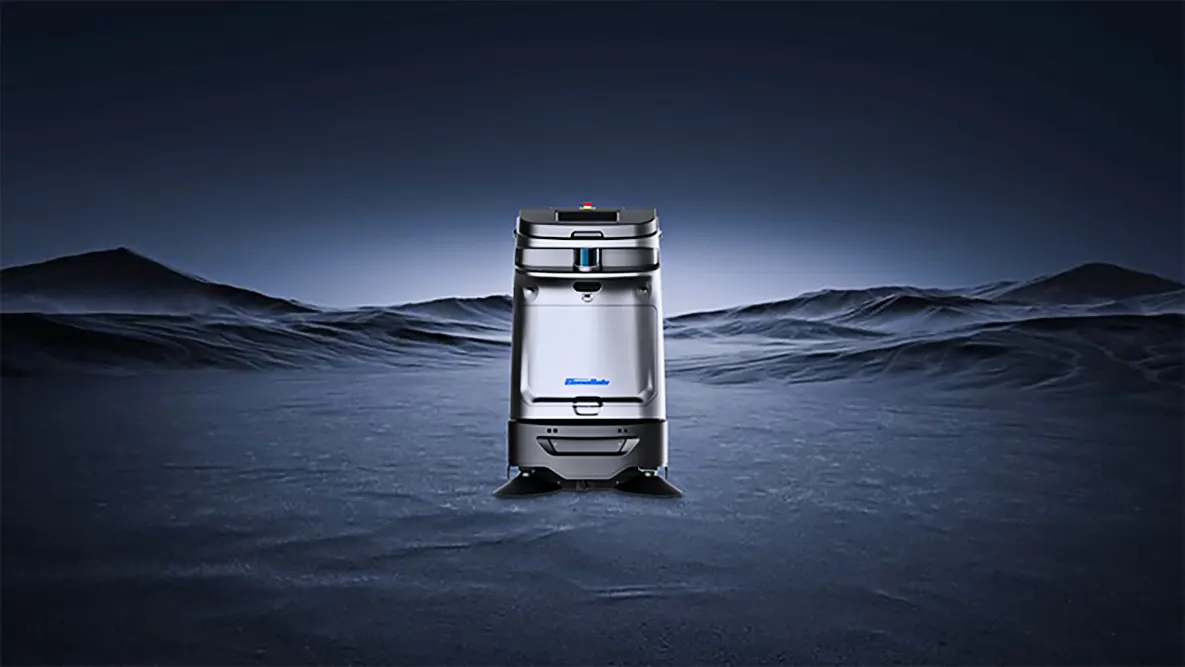
How does AI work in a cleaning robot? AI in commercial cleaning robots turns raw sensor data into specific movement and cleaning decisions. Sensors such as LiDAR and cameras “see” the environment, but AI classifies obstacles, predicts how they will move, selects an alternative route when something blocks the path and decides whether to clean a particular surface immediately, later or not at all.
Without this processing, the robot would have access to the same data but could not use it to distinguish between a person walking past and a stationary shelf, or between a stain that requires treatment and a mere reflection on the floor.
How does AI turn sensor data into specific decisions?
AI processes sensor data by:
- classifying obstacles (for example, distinguishing a vehicle from a small object)
- predicting the movement of people, trolleys or forklifts
- selecting an alternative route when something blocks the primary path
- adjusting the robot’s speed and behaviour to its current context
The robot makes these decisions in real time while performing the task, not in advance.
CenoBots robots use NVIDIA AI platforms for this processing. These platforms process incoming sensor data at high speed to keep the robot’s behaviour stable and predictable, even in busy, changing environments such as warehouses with forklifts or hospital corridors with patients and staff.
To see how this combination of AI processing, 3D LiDAR and autonomous navigation works in practice, watch the CenoBots L3 AI-Powered Autonomous Scrubber Dryer video
What is “big model” cognitive intelligence and what purpose does it serve?
Big model“ architecture represents a more advanced layer of AI processing that helps the robot interpret more complex information from its surroundings. In models that CenoBots identifies as using this technology, the goal is to understand objects, obstacles and situations in the environment more effectively so that the robot can adapt its autonomous behaviour to real working conditions.
With this type of intelligence, the robot can decide whether to simply avoid an obstacle, slow down and clean around it, or prioritise that particular stain instead of treating every part of the floor in the same way.
In practice, this means that the robot focuses on genuinely dirty areas, reduces unnecessary passes and uses energy more efficiently instead of repeating an identical cleaning pattern regardless of the floor’s actual condition.
How does AI recognise and classify waste during cleaning?
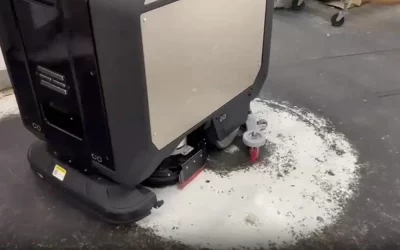
AI recognises waste by using cameras and sensors to scan the floor surface, while an algorithm classifies what it detects. In the CenoBots SP50, the system recognises more than 30 different types of waste with 99% accuracy. This capability allows it to automatically adjust the cleaning method and intensity according to what it actually detects instead of applying the same approach everywhere.
This targeted cleaning method (“spot cleaning”) allows the robot to focus on areas where it detects waste instead of treating every surface with the same intensity regardless of its current condition.
In the CenoBots L4, a similar AI feature, stain and liquid recognition (stain perception), allows the robot to identify wet or dirty areas and adapt the treatment to those specific locations.
Do all CenoBots models have the same AI computing power?
No. AI computing power differs between CenoBots models, as do the functions that use the computing platform. You should therefore consider the number of TOPS alongside the sensors, software and specific AI functions of each model, rather than viewing it as an independent measure of the model’s overall capabilities.
| CenoBots model | AI computing power | Key AI function |
| L3 | 100 TOPS (NVIDIA) | Voice control, floor-level obstacle recognition (cables, carpets) |
| L4 | 32 TOPS (NVIDIA) | Stain and liquid recognition (stain perception) |
| L50 | 32 TOPS (NVIDIA) | “Big model” architecture with approximately 10 billion parameters, automatic map updating |
| S5 | 100 TOPS (NVIDIA) | Vehicle recognition, adaptation to dynamic environments |
| SP50 | 32 TOPS (NVIDIA) | Waste recognition (30+ types, 99% accuracy), self-checking of cleaning results (CRC) |
A higher number of TOPS (Tera Operations Per Second) means that the chip can process more AI operations per second. This capability proves particularly important for models that operate in busier or more complex environments, where they must make decisions quickly.
How does software enable multiple robots to work together?
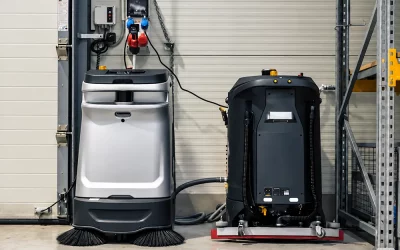
Software coordinates multiple robots through functions such as TeamClean, where the CenoBots S5 works alongside scrubber-dryer robots (L3, L4 or L50) in a so-called “sweep-then-scrub” workflow: the S5 first sweeps up dry waste, after which the floor-scrubbing robot cleans the same area with water, without requiring the operator to coordinate their working sequence manually.
This type of coordination proves particularly useful in large industrial facilities, where manually planning the working sequence of several machines would take additional time and increase the risk of overlapping or missing areas.
What remains under the operator’s control, and what does AI handle independently?
The robot independently makes certain movement decisions in real time, such as reacting to an obstacle, slowing down or adjusting its route. The operator defines the broader operating parameters:cleaning zones, restricted areas, schedules and tasks. Autonomous navigation therefore does not mean that the robot independently makes every organisational decision related to facility maintenance.
This division of responsibilities also aligns with the broader principles for the reliable application of AI systems, which NIST defines through its AI Risk Management Framework as requirements for transparency, reliability and clear accountability in the decision-making process
How does AI work in a cleaning robot – FAQ
Is the AI in CenoBots robots the same as ChatGPT?
No. ChatGPT and the AI system in a cleaning robot serve different purposes. Although some advanced AI architectures may use related machine-learning principles, ChatGPT processes and generates language. AI in a robot processes data from the physical environment to perceive its surroundings, navigate and perform specific tasks.
Does the AI chip operate locally on the robot, or does it depend on an internet connection?
The AI chip operates locally on the robot itself (edge computing), allowing it to make movement and obstacle-avoidance decisions in real time without waiting for a remote server to process the data. The robot usually uses an internet connection for other functions, such as the mobile application and remote monitoring, not for immediate basic navigation decisions.
Does AI decide when the robot should return to recharge?
Yes, in terms of monitoring the battery level and the remaining task. The robot uses a predefined system (the workstation) for charging and refilling its water supply, rather than making an independent AI decision to change the work plan. AI monitors when the robot needs to return, while the station carries out the charging process.
Does AI help the robot use less energy?
Yes, indirectly. When AI recognises where cleaning is genuinely necessary and avoids unnecessary passes over surfaces that are already clean, the robot uses less energy per task than it would if it treated every area identically, regardless of the floor’s actual condition.
The point is not how many AI functions a robot has, but which ones your facility actually needs. If you want to determine which CenoBots model best suits your space and maintenance requirements, we are here to help you find the right solution.
About the author:
Milja Tonić – SEO Content Strategist & Copywriter
Milja Tonić is an SEO Content Strategist and Copywriter who specialises in creating expert content on facility management, professional maintenance of commercial facilities and the automation of cleaning processes.
Through research, SEO strategy and original content development, she creates content about professional hygiene, facility management and the use of autonomous cleaning robots in various commercial environments.

0 Comments